
Sharpener
Sharpener is a prototyped mobile application design that matches students with tutors based on students' academic weaknesses and tutors’ expertise.
Project Overview
Sharpener (i.e., Tinder for Tutors) is a seminal UX design project that leverages algorithmic matching to alleviate anxieties around student-tutor pairing. Traditional tutoring platforms fail to account for learners' emotional states and specific curriculum levels. I designed a mobile concept centered on streamlining student-tutor compatibility. Over a 6-week period, consisting of competitive audits, persona & storyboard development, and user flow creation, resulted in a high-fidelity system that made the student-tutor pairing process easier by increasing confidence in student-tutor compatibility.
Timeline
6 weeks / January 2025
Role
UX Researcher & Designer
Scope
Academic Portfolio Project
Tools
Figma, Miro, Prototyping
Design Problem Statement
Students, parents, and tutors need a mobile-first tutor-matching service that prioritizes personality and learning-style compatibility, as current platforms fail to address the frustrations of struggling students, ultimately hindering their academic progress.
Research-Based Discovery
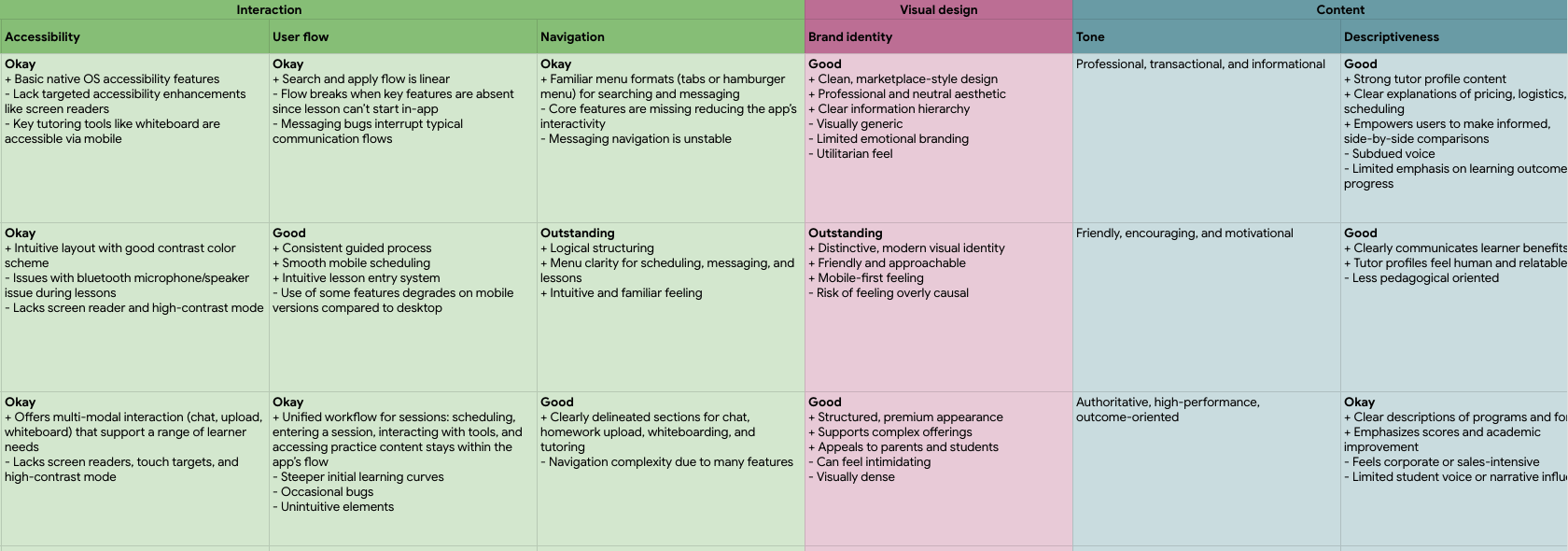
Competitive Audit Research
Performed an extensive competitive audit to clarify industry standards and gaps.
Goal: Assess the user experiences to gain insight into user groups and identify market gaps.
Direct competitors
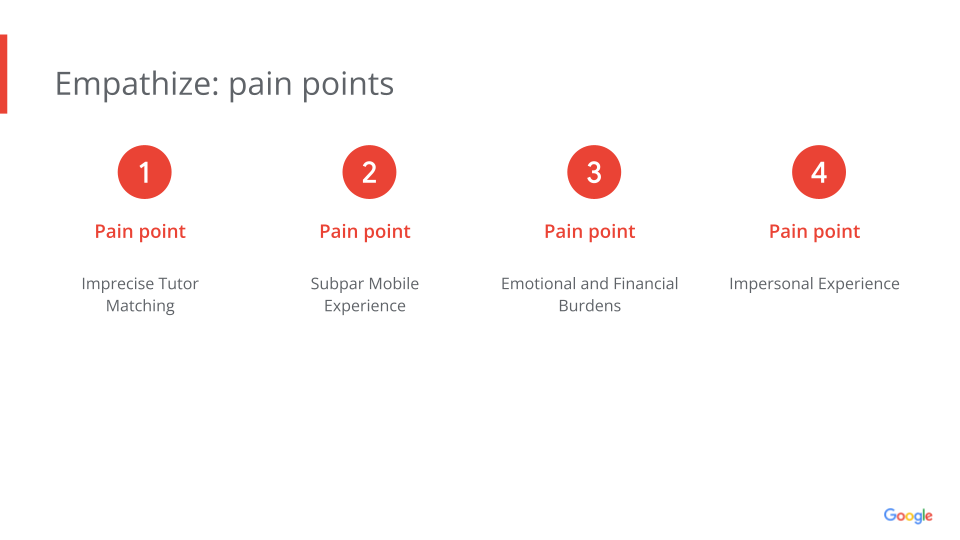
Pain Points
Determined four key pain points by identifying systemic issues uncovered through competitive audit analysis.
Imprecise Tutor Matching
Subpar Mobile Experience
Emotional and Financial Burdens
Impersonal Experience
Problem Space Synthesis
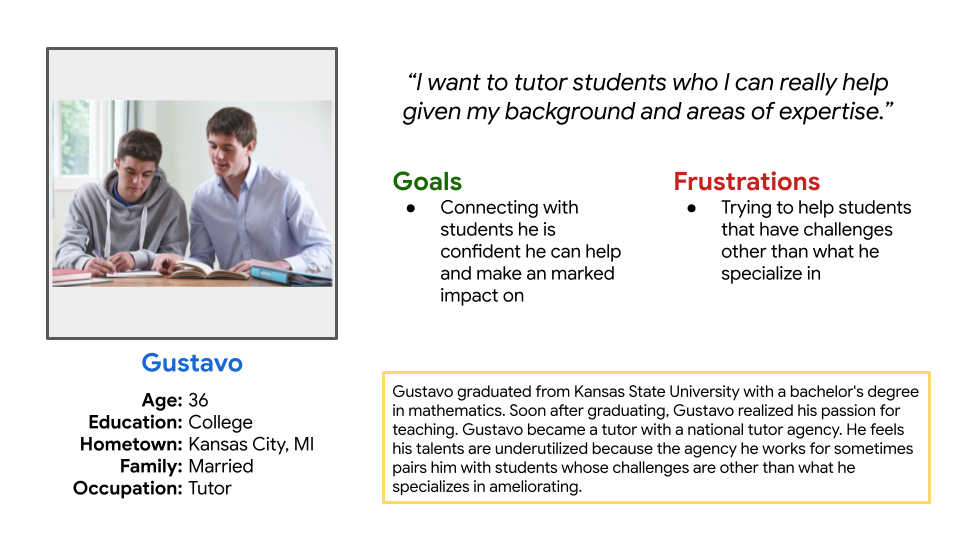
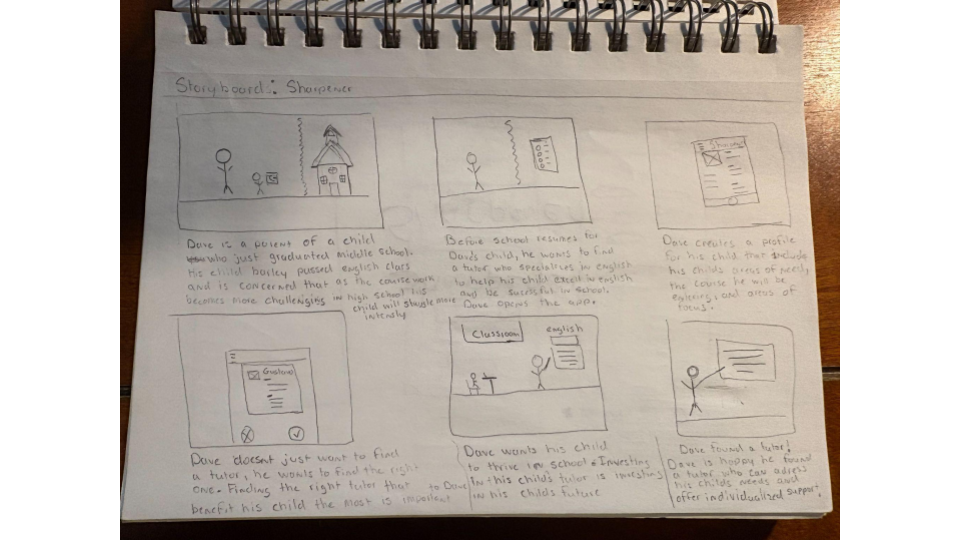
Persona & Storyboard Development
Developed a tutor persona and storyboard to personify users and visualize the context of use.
Gustavo needs a way to pair with students who could most benefit from his expertise and background.
The storyboard illustrates how users’ emotional state impacts the context of use.
Core Problem Statement
Students, parents, and tutors need a mobile-first tutor-matching service that prioritizes personality and learning-style compatibility, as current platforms fail to address the frustrations of struggling students, ultimately hindering their academic progress.
Systematic Design Logic
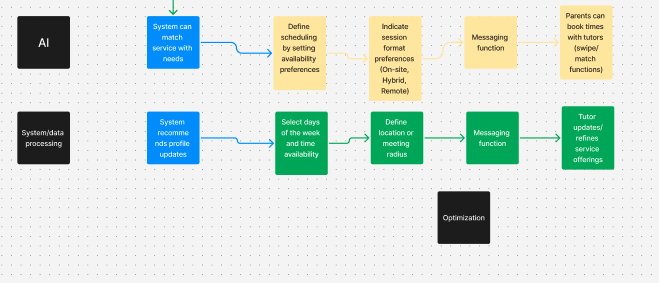
User Flow Evolution
Produced a user flow outline to guide the user flow creation process.
Accounted for AI optimization and system processes to optimize usability
Depicts tutor and student flows
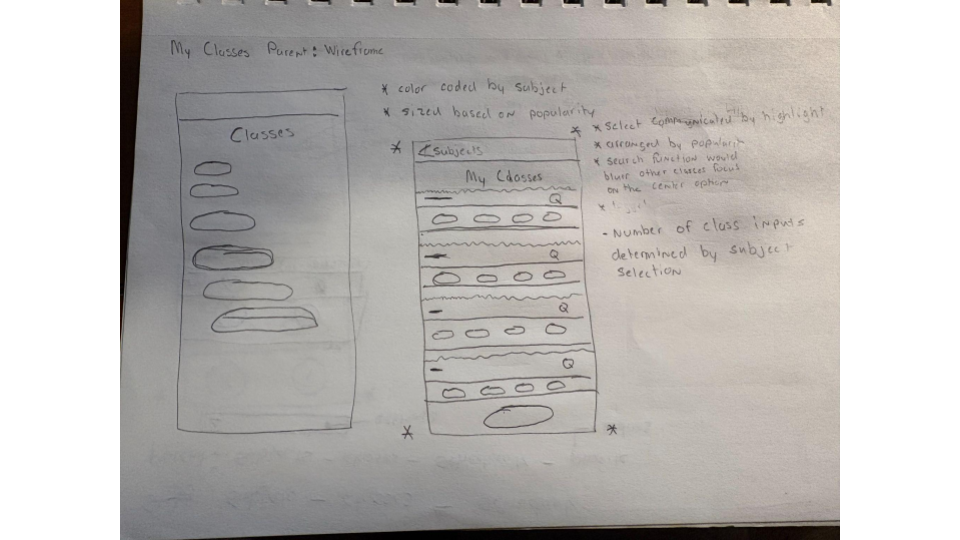
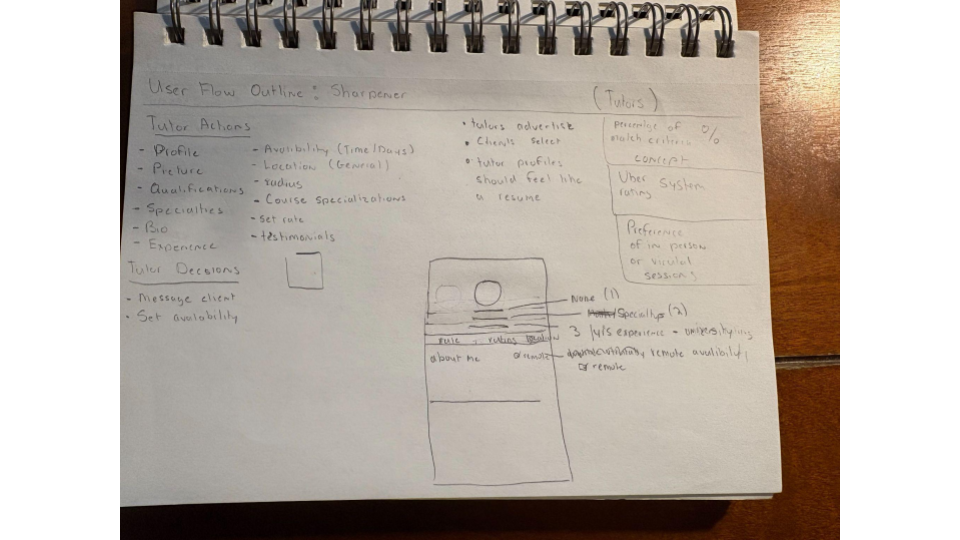
Paper Wireframes
Developed rapid ideation paper wireframes.
Prioritized core scheduling, subject, and class selection features
Iterative High-Fidelity
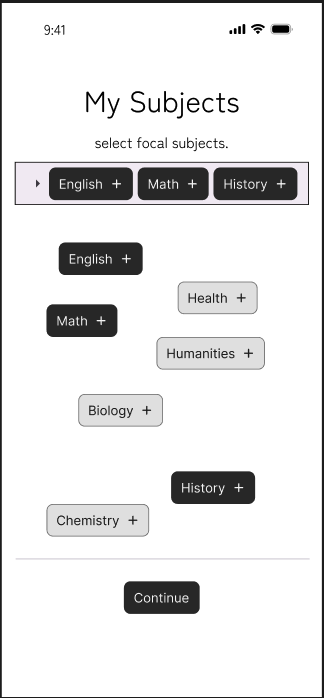
Digital Transition
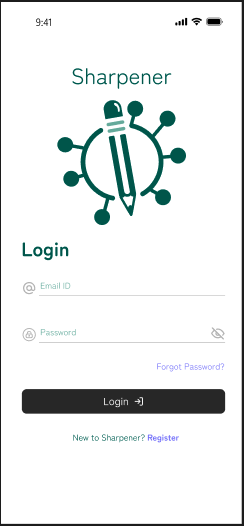
Converted my paper concepts to a digital interface.
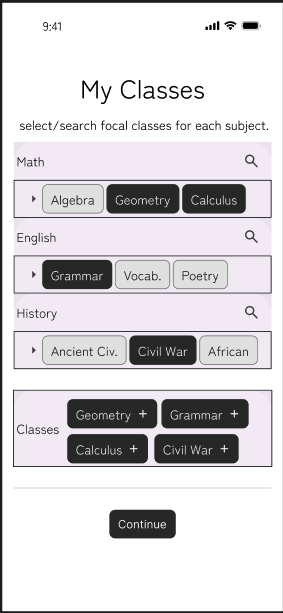
Continued to emphasize subject and class selection during the conversion process
Hypothesis & Goal Statement Guidance
Hypothesis: If we create a mobile-first interface that uses AI to match students and tutors based on personality and learning styles, we will see a 20% improvement in academic outcomes and a significant reduction in student frustration, as the pairing addresses learners' emotional and academic needs simultaneously.
Goal Statement: Design a mobile-first interface capable of leveraging artificial intelligence to improve the personality and learning style of student-tutor compatibility pairings, fostering more gratifying long-term student-tutor relationships, and reducing student frustration by yielding better 20% academic outcomes.
Key Design Decision Justifications
Progressive Disclosure: The progression from selecting a general subject to a specific class prevents information overload. The minimalist design supports the goal of engendering "gratifying long-term relationships” by making the initial onboarding process seem manageable rather than overwhelming.
Granular Subject Selection: The “My subjects” screen uses a bubble-based selection interface to gather particular data points. This design decision advances the precise collection of data necessary for AI to match a student’s academic weaknesses with a tutor’s expertise.
Structured Class Hierarchy: The class selection feature is designed to ensure the system obtains the specific curriculum level (e.g., Algebra vs. Calculus). This supports the hypothesis that precision pairings lead to a 20% improvement in academic outcomes.
Reflection & Future Directions
Critical Reflection: Methodological Synergy
The development of Sharpener served as a foundational methodological inquiry into the UX lifecycle, illustrating that the design phases—research, ideation, prototyping, and evaluation—are not discrete tasks but a deeply interdependent, integrated system. My initial approach underestimated this synergy, a gap that became acutely apparent during storyboard development. Incomplete primary research meant I lacked the empirical data necessary to effectively model users’ emotional states and high-stakes contextual needs, resulting in a design that was conceptually strong but empirically unverified.
I now recognize that design decisions, such as the implementation of a structured class hierarchy, must emerge as a direct consequence of user-validated data rather than designer assumptions. Without iterative testing, even well-intentioned features, such as AI-driven precision matching, risk imposing a significant cognitive burden. This project taught me that fragmented research commonly leads to oppositional design, where a system unintentionally works against the user.
Validation Plan: Experimental Inquiry
To counteract these research gaps, I have developed a structured validation framework founded in HCI research methodologies. My principal objective would be to test the core hypothesis that precision-based pairing enhances student performance through a semester-long longitudinal study. This would allow for the collection of quantitative data to assess whether the system accomplishes its goal of a 20% improvement in academic outcomes.
Should the longitudinal data prove inconclusive, I would pivot to a comparative usability study. By benchmarking the Sharpener prototype against conventional tutoring-matching interfaces, I would collect granular metrics on task achievement rates, interaction efficiency, and subjective user frustration to refine the system’s interaction logic.
Future Scoping: Ethical and Algorithmic Responsibility
Looking beyond immediate usability, I am increasingly focused on the socio-technical implications of AI-mediated design. Since Sharpener relies on algorithmic pairing, it faces the inherent risk of computational bias. To mitigate this, I would advocate using diverse training datasets that represent a broad spectrum of demographics and learning styles to ensure equitable connections to proper educational resources. Furthermore, I advocate implementing routine independent audits of pairing outcomes to identify and dismantle inequitable patterns, ensuring the system remains a tool for inclusive academic empowerment.